
Luxury Vinyl Plank in Fredericksburg
Waterproof, click-lock LVP with the warmth and grain of real hardwood, our most requested swap for tired carpet in basements and main-level living spaces.
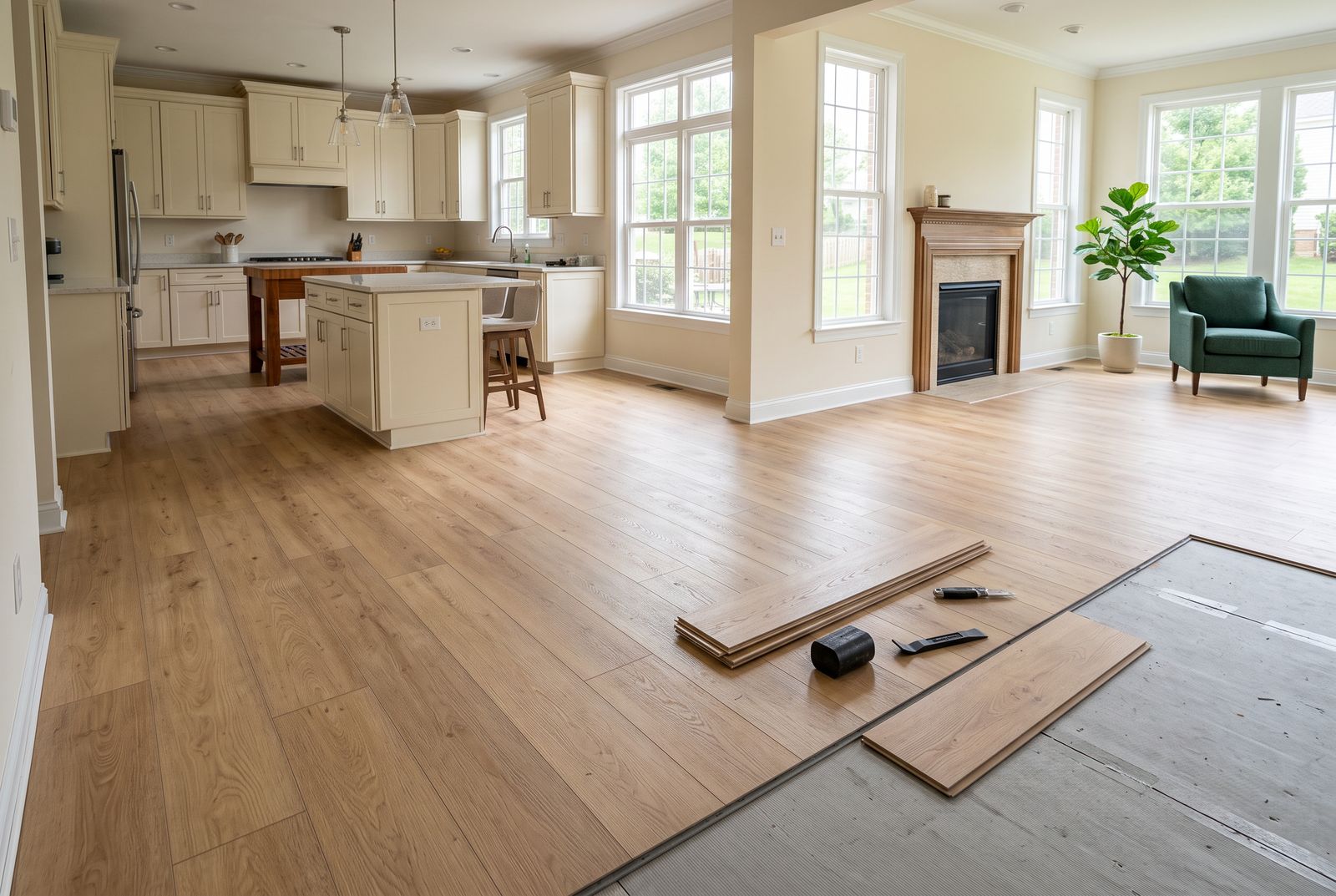
Real wood look, waterproof core
LVP is thicker and more rigid than standard vinyl, built with a waterproof core underneath a realistic wood-look wear layer. The planks click together and float over the subfloor, no glue or nails needed, which makes for a faster, cleaner install day.
It's the material we get asked for most across the Fredericksburg area, especially from homeowners replacing worn carpet or looking for something that can handle a basement without worry.
- Waterproof SPC or WPC core
- Click-lock floating install
- Wide range of wood-look tones
- Basement & whole-level ready
Spaces built for LVP
LVP's waterproof core and floating install make it a fit for spaces where hardwood or carpet would struggle.
Finished basements
A concrete slab and occasional dampness rule out hardwood. LVP floats over it and handles the moisture without complaint.
Main living levels
Whole-floor LVP through the kitchen, living room and hallway gives a consistent look without the price tag of solid hardwood.
Old carpet replacements
Worn wall-to-wall carpet is the single most common tear-out we do before an LVP install, especially in family rooms.
Homes with kids & pets
A dented, scratched or spilled-on plank can be replaced individually, and the surface stands up to claws and toys far better than wood.
LVP or standard vinyl
Both resist water. LVP is the thicker, more solid-feeling upgrade.
Thickness & feel
LVP runs thicker than sheet or tile vinyl and feels firmer and quieter underfoot, closer to real wood than a standard vinyl floor.
Install method
Standard vinyl is usually glued down. LVP typically floats with a click-lock edge, which means a faster, mess-free install day.
Best use
Vinyl suits small wet rooms on a tight budget. LVP suits larger living areas and basements where look and durability both matter.
LVP flooring, answered
Is LVP actually waterproof?
Most of the LVP we install has a waterproof rigid or SPC core, meaning standing water on the surface will not swell or warp the plank the way it would hardwood or laminate. It's why LVP has become the go-to for basements and walkout lower levels around Fredericksburg, where a little moisture is always a risk.
Can LVP go over concrete in a basement?
Yes, that's one of its biggest advantages. Click-lock LVP floats over a thin underlayment without glue or nails, so it installs directly over a concrete slab as long as the slab is flat and reasonably dry. We check moisture levels before we commit to a basement install.
How does LVP compare to laminate flooring?
Laminate uses a photographic wood image under a hard wear layer over a wood-fiber core, so it can swell if it gets wet. LVP uses a vinyl wear layer over a waterproof plastic core, so it handles moisture, temperature swings and dents better. Most homeowners can't tell the two apart by look once installed.
Why are so many homeowners replacing carpet with LVP?
LVP has become our most requested swap for old carpet on main living levels. It's easier to keep clean with kids and pets, doesn't trap odors or allergens the way worn carpet does, and gives a room a more finished look without the cost of solid hardwood.
More flooring we install
Let's talk about your LVP floor
Tell us the rooms and your timeline. We'll set up a free in-home estimate with real samples.