
Floor Sanding in Fredericksburg, VA
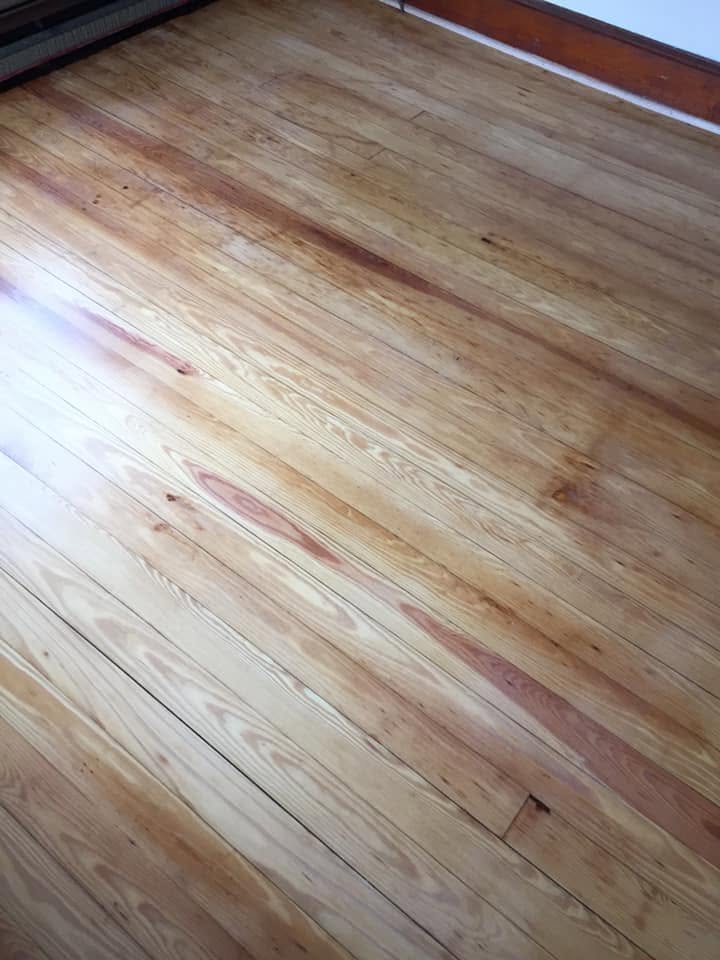
Dust-contained sanding that levels cupped boards and old finish down to clean wood, ready for stain or a fresh clear coat.
How we contain the dust
Sanding an occupied home means dust control matters as much as the sanding itself. We run drum and edge sanders fitted with vacuum dust collection, seal off the work area with plastic sheeting, and keep the mess out of the rest of the house.
We also fill nail holes and gaps as we go, so the floor that comes out of sanding is genuinely ready for stain or a clear coat, not just swept.
- Vacuum-fitted sanders
- Sealed work area
- Filtered dust collection
- Daily cleanup pass
The grit progression
Each pass uses a finer abrasive than the last, so no single pass has to do all the work.
Coarse cut
Removes the old finish, deep scratches and high spots, taking the floor down to raw wood.
Medium pass
Erases the marks left by the coarse pass and starts leveling the surface across the room.
Fine pass
Brings the wood to a smooth, even surface that will take color evenly under stain.
Screen & buff
A final light pass and buffing screen leaves the wood silky smooth, ready for stain or finish.
What sanding can and can't fix
Sanding solves most surface problems. A few issues need a different fix before we ever plug in a sander.
What sanding corrects
Cupped or crowned boards, shallow scratches and stains, old wax or built-up polyurethane, and uneven color from years of sun fading all come out in a standard sand.
What sanding can't undo
Deep gouges through the wear layer on an engineered floor, boards still cupping from an active moisture leak, or a floor already sanded down to its last usable layer on a prior refinish.
Prepping for stain or coat
Every sanding job wraps up the same way, whether you're going straight to a clear coat or picking out a stain color next.
- Vacuumed & tack-clothed
- Grain raised & rechecked
- Nail holes filled & smoothed
- Ready same day for stain or coat
Sanding questions we hear
How much dust does sanding create in my home?
We contain nearly all of it with vacuum-fitted sanders, sealed plastic barriers and a daily cleanup pass, but plan on a light film of dust in the work area itself until the final vacuum.
How long does sanding a room take?
A single room usually takes about a day. A full first floor can take two to three days depending on square footage and how much repair work the subfloor needs first.
Can you sand engineered hardwood floors?
Some engineered floors have enough wear layer for one light sand, others do not. We check the wear layer thickness during the estimate before recommending sanding over a fresh veneer or refinish.
Do we need to leave the house during sanding?
You do not have to, though most families prefer to be out during the loudest, dustiest hours. We can work around a schedule that keeps you close by if you need to stay.
After the sand
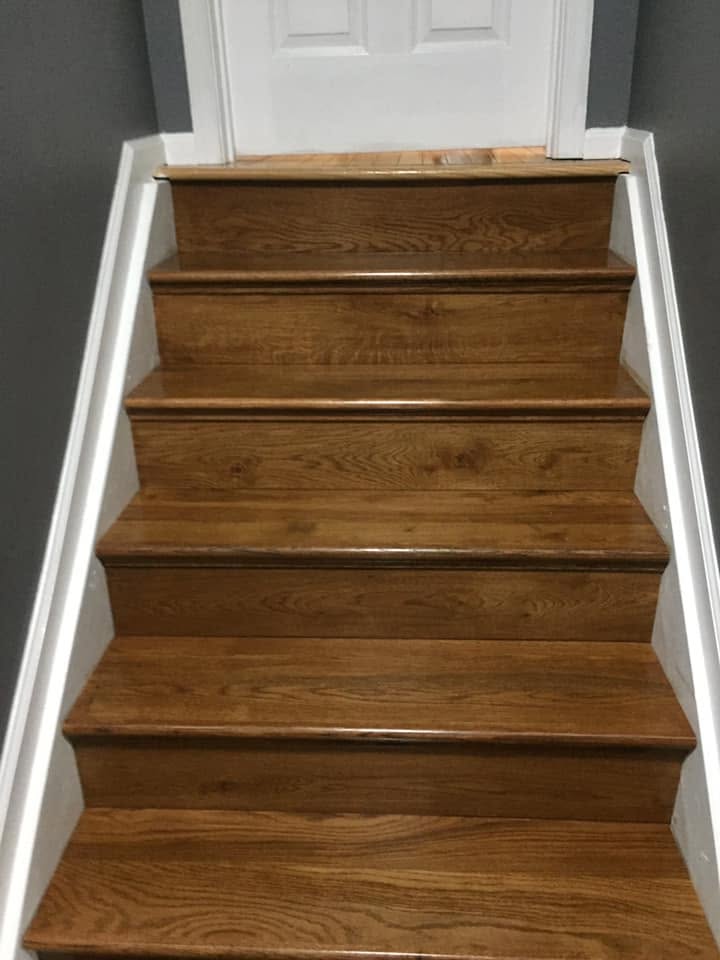
Sanding is usually step one. From here most homeowners move into staining or the full refinishing service, and if a few boards need full replacement first we can tie in new hardwood or stair tread work before the sander ever starts.
Staining
Bare wood is ready for color. See how we pick and sample your stain.
View serviceRefinishing
Want sanding, staining and sealing handled together in one visit? Start here.
View serviceCustom Hardwood
Replacing a damaged section? We can sand new custom hardwood level with the old.
View serviceWe sand floors throughout Fredericksburg and the surrounding counties. See our full service area list.
Let's get your floors sanded right
Tell us the rooms and what shape the wood is in. We'll set up a free in-home estimate.